Question 66
In the face of climate change, how can irrigation and drainage contribute to agro-ecological transition? / Face au défi climatique, comment l’irrigation et le drainage peuvent contribuer à la transition agroécologique ?
Question 67
Innovative technology and practices for increasing water use efficiency : Irrigation management and services, remote sensing, irrigation equipment,…where do we stand ?/ Sobriété de l'usage agricole de l'eau : La technologie doit faciliter l'évolution des pratiques. Avertissement, pilotage, télédétection, matériel d'irrigation... Où en sommes-nous ?
Question 68
Non-conventional water (REUSE, desalination): can we really loosen the grip on the resource and for what uses? / Eaux non conventionnelles (REUSE, dessalement) : peut-on réellement desserrer l'étau de la ressource et pour quels usages ?
International Symposium
Future Proofing Irrigation: Modernisation and IWRM, Finance, Policies, and Institutions
ICID has been organizing its flagship triennial event International Congress on
Irrigation and Drainage since 1951. The ICID triennial Congresses are organized to discuss and
evaluate the upcoming and dynamic changes within the water sector in the entire world. Every third
year, from the emerging global trends, two Questions or thematic areas are identified, on which
papers are invited and, a Special Session, Symposium.
This pre-congress e-proceeding in your hand contains all the ‘Abstracts’ of accepted papers together
with their French translation in the Abstract Volume and their full text separately in the USB flash
drive. The volume also contains the General Reports on Questions 66, 67, 68. More Info
International Workshops
International Workshop on “Implementation of the Water-Energy-Food (WEF) Nexus at different scales for Socio-Economic Development”
International Workshop on “Climate-Resilient Coastal Irrigation and Groundwater Management under Land Subsidence and Salinization Risks” (WG-SCER)
International Workshop on “2nd World Heritage Irrigation Structures Conference” (WG-HIST)
International Workshop on “Women in Water Governance & Management:From Participation to Meaningful Leadership–A Showcase of Local to Global Best Practices”(TF-WEWM)
N.D. Gulhati Memorial Lecture
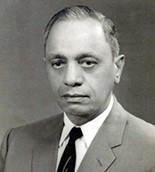
The N.D. Gulhati memorial lecture is delivered at the ICID International Congress on Irrigation and Drainage by an invited eminent expert from across the world. The aim is to provide an international status and significant developments in irrigation and drainage engineering including all allied aspects like environment, sociology, economics etc.

Prof. Michele Perniola
13th N.D. Gulhati Memorial Lecture
The 13th N.D. Gulhati Memorial Lecture for International Cooperation
in
Irrigation and Drainage on the topic “Bridging Heritage and Innovation:
Navigating Global Water Scarcity in the Spirit of N.D. Gulhati” by Prof. Michele
Perniola
Prof. Michele Perniola is currently National President of Ital-ICID (Italian National
Committee of the International Commission on Irrigation and Drainage), a position he has
held since July 2026. He is a long-standing academic at the University of Basilicata, where
he has served as a researcher and faculty member since 1986 and currently heads the Degree
Course in Agricultural Sciences and Technologies.
A distinguished agronomist with over 230 scientific publications, Prof. Perniola has made
significant contributions in plant-water relations, irrigation management, crop adaptation
to climate change, and precision agriculture in Mediterranean environments. He previously
served as President of the Italian Society for Agronomy, Editor-in-Chief of the Italian
Journal of Agronomy, and National Coordinator of the CNR Irrigation Study Group. He is also
a member of the Accademia dei Georgofili.
Eau Agriculture et Territoires (E.A.T.)
- Les enjeux de l’eau pour une agriculture durable - Contribution au débat public: Version française - 2024
- E.A.T. Vision: Water Issues for Sustainable Agriculture - Contribution to the Public Debate - Full Version - 2024
- E.A.T. Vision: Water Issues for Sustainable Agriculture - Contribution to the Public Debate: Summary Version - 2024
- France: Brief Country Profile